
Resource-Driven Warfare
Every match in Stick Command Saga begins with economy, not combat. You start by collecting gold, which you spend to recruit miners. Those miners then harvest additional gold and crystals, the two resources that fund your entire army. The opening minutes are therefore a calculated gamble: invest too heavily in miners and you leave your castle exposed, but skip them and you cannot afford the units needed to pressure the enemy. This tension between short-term safety and long-term output shapes every decision that follows.
Unit Composition and Deployment
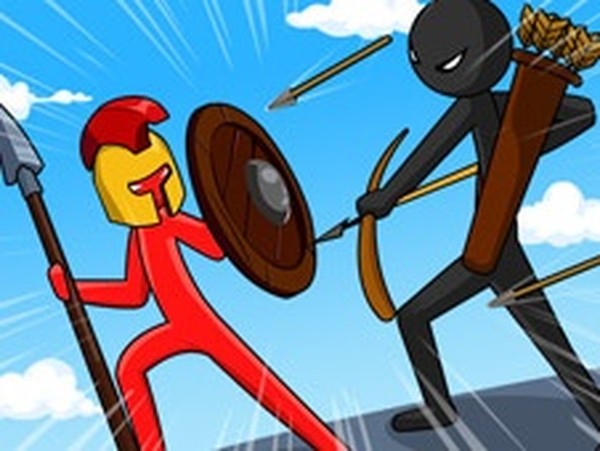
Once your economy is running, you spawn warriors, shooters, and mages, each filling a distinct role on the battlefield. Warriors absorb damage at the front, shooters provide ranged pressure, and mages bring abilities that can swing engagements. The roster extends to giants, ninjas, and angels, and each unit type has its own strengths that interact with the others. Sending the right mix at the right moment matters more than sending the most units, because a poorly timed push can leave your castle undefended while your troops are away.
Offense, Defense, and the Shield Button
A shield button lets you activate defensive mode, recalling your soldiers to protect your own castle. This single control defines the game's rhythm. Push too aggressively and an enemy counterattack can end the match; retreat too often and you never capture the enemy stronghold. Reading your opponent's deployment and deciding when to commit or pull back is the core skill the game tests. Resource management and timely unit deployment are essential for success.
Modes, Skills, and Progression
The game offers a campaign mode set across fantasy realms, a trial mode, and an endless mode for continuous challenges. A skills and blessings system lets you enhance your army's performance, and different unit combinations and upgrade paths give you room to experiment against varied opponents. Each realm presents unique challenges that require careful planning and adaptation, so strategies that work in one environment may need rethinking in the next.


Comments
0 comments