
Puzzle Mechanics and Controls
Each puzzle starts with a scattered set of pieces and a reference image. You select a piece from the side panel, drag it onto the board, and drop it where you think it belongs. Correct placements snap into position, giving immediate feedback. There is no timer, so you can study the reference and move pieces at your own pace. The drag-and-drop system works the same way on any device, whether you use a mouse or a touchscreen.
Movie Scenes and Visual Style
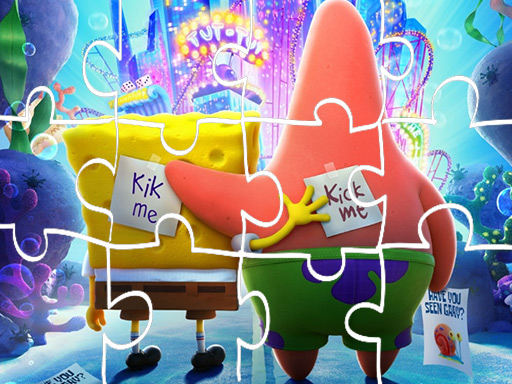
The puzzles are built around the SpongeBob movie storyline, specifically the journey to the Lost City of Atlantic City to rescue Gary the snail. Scenes and characters from that film appear across the puzzles, so fans who know the movie will recognize specific moments as they assemble each picture. The artwork stays close to the movie's colorful underwater look, which helps when you are matching pieces by color and shape.
Adjustable Difficulty and Pace
Before starting a puzzle, you can choose from different piece counts. Fewer pieces suit younger players or anyone new to jigsaw games, while higher counts give experienced puzzlers a longer, more demanding session. Because there is no time limit, the difficulty comes entirely from the number of pieces and the complexity of the image, not from external pressure. This makes the game approachable for a wide age range within the family category.
Practical Tips for Assembling Puzzles
A reliable first step is to gather edge and corner pieces to form a frame. Sorting remaining pieces by color or pattern reduces the time spent scanning. The reference image is available throughout, so check it when a section is unclear. If progress stalls, stepping away for a few minutes often makes the next match easier to spot. Starting with a lower piece count helps you get comfortable with the controls before trying larger puzzles.





Comments
0 comments