
What Players Actually Do
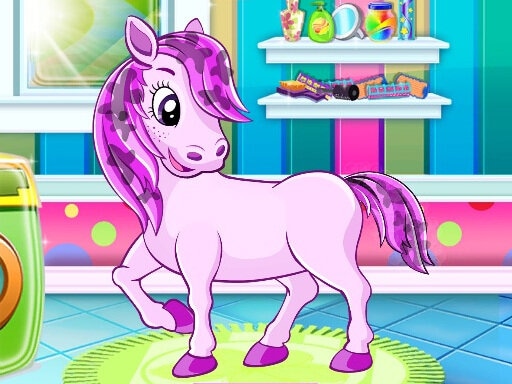
Each session begins by choosing a pony to style. Players then use a mouse or finger to pick up grooming tools such as combs, brushes, and ribbons. The first task is hair care: removing tangles and adding curls to the pony's mane. After grooming, the game moves to a dress-up stage where players select from outfits, hats, and shoes. There are no wrong choices, so experimentation is built into the flow. Once a look is complete, the pony is ready for the event, and players can take a photo to save their creation.
How the Game Handles Progression
Pony Care and Style Adventure does not use timers or scores. Instead, progression is tied to unlocking new accessories and outfits as the player continues. Playing repeatedly expands the available wardrobe and styling options. This structure lets young children work at their own pace without pressure. Hints appear on screen to guide players who are still learning the controls, which keeps the experience accessible for early learners.
Why the Design Suits Young Players
The game avoids competitive mechanics and time limits, which are common sources of frustration for children. Bright graphics and cheerful music set a positive tone. Each pony has its own personality, and some show preferences for certain accessories—floral styles for one, sweet styles for another. Paying attention to those preferences gives the styling a light purpose beyond pure decoration. The overall focus stays on creativity, gentle care, and friendship rather than winning or losing.
Practical Tips for Better Results
Take time to explore every grooming and dress-up option before settling on a final look. Combining different hair treatments with outfit choices produces more varied results than repeating a single formula. Because each pony responds to different accessories, matching the style to the pony's personality leads to a more cohesive appearance. The photo feature works well for saving favorite creations and sharing them with family members.







Comments
0 comments