
The Push-and-Plan Mechanic
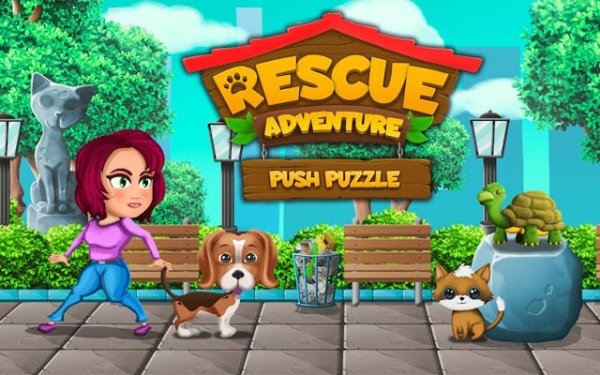
Every level in Wildlife Shelter Logic Puzzles revolves around a single interaction: pushing objects. Crates, boulders, and similar items sit on a grid, and moving them changes the layout permanently. Because a pushed crate cannot be pulled back, each action carries weight. The objective is straightforward—reach a stranded animal and collect a key to open its enclosure—but the arrangement of barriers and paths turns that simple goal into a spatial reasoning exercise. [IMG_1]
How Difficulty Builds
Early puzzles introduce the basics: a single crate to push aside, a straight corridor to follow. Later stages add obstacles such as tangled ground vines that slow movement, forcing detours and making route planning more demanding. The difficulty curve stays gentle, so newcomers can learn the rules without frustration while experienced solvers still find levels that require careful thought. Any level can be reset instantly, which encourages experimentation without penalty.
Presentation and Tone
The visual style is bright and cheerful. Cute animal characters appear in friendly, non-threatening depictions, and environments are kept clean and uncluttered so the puzzle grid remains the focus. This warm, supportive tone reinforces the rescue theme and makes the game approachable for younger players and families. [IMG_2]
Stars, Stickers, and Replay
Completing a level quickly earns up to three stars. These stars unlock a collection of stickers and photographs of the rescued animals, forming a digital album that records progress. The reward system provides a light incentive to revisit levels for better scores, but there is no pressure to achieve perfect results on a first attempt. Thoughtful play is valued over speed.
Controls and Accessibility
Controls require only simple directional inputs, making the game accessible to young children and adults alike. No time limit is imposed, so players can analyze each puzzle at their own pace. The ability to reset a level at any point removes frustration and supports a trial-and-error learning style. These design choices suit both short casual sessions and longer strategic play.




Comments
0 comments