
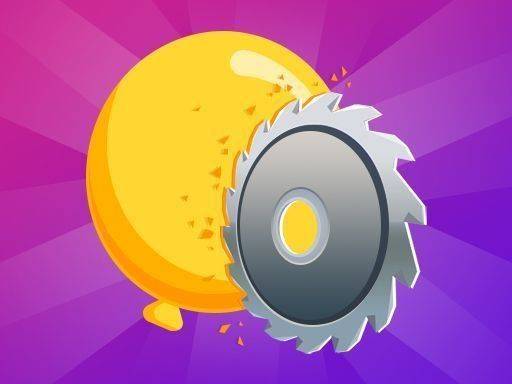
The Bounce and Nudge System
Every shot in Gear Hop Burst starts the same way: you launch a gear from a fixed point and it travels in a straight line until it hits a surface. At that moment, it changes direction naturally, like a billiard ball off a cushion. What separates the game from a pure physics demo is the nudge. While the gear is still moving, you can tap again to give it a slight push, altering its trajectory mid-flight. That single input turns each shot into a small experiment. Early screens let you observe how angles work; later ones ask you to chain several bounces in one throw.
Reading the Board Before You Launch
Each screen presents a fixed arrangement of targets that must be popped to proceed. Some sit in open space, easy to reach with a direct line. Others hide behind barriers or only expose a narrow approach angle. As you advance, moving walls and temporary shields appear, so the path you planned a second ago may no longer exist. Because there is no time limit, the game rewards patience: study the whole board, trace the likely rebound, then commit. The gear does not care how long you took.
Visual Style and Feedback
The palette leans cheerful, with soft gradients and friendly shapes. Backgrounds rotate between themed spaces such as gardens, toy rooms, and abstract geometric areas. When a target pops, you get a gentle sound and a small visual burst. That feedback is deliberately understated, which keeps the mood light and makes short sessions feel restful rather than demanding.
How Difficulty Grows
The opening levels function as a tutorial, showing how the gear behaves and when the nudge is useful. From there, layouts become more complex and demand precise timing. Fragile targets may break if hit too hard, and moving obstacles can shift the gear's path unexpectedly. The curve rises steadily, so you stay challenged without hitting a wall.



Comments
0 comments