
Fitting Blocks to the Grid
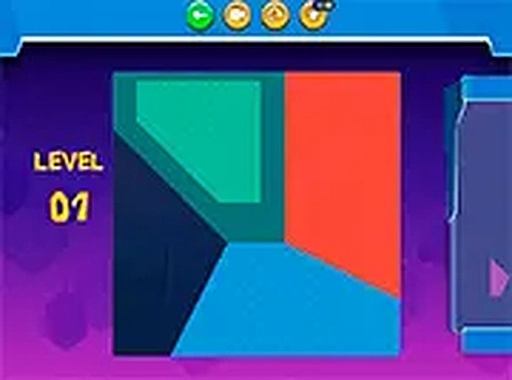
Every puzzle in Geometric Block Arrangement Challenge asks the same fundamental question: can you place a given set of polygonal shapes onto a gridded board so that no two pieces overlap and no cell is left empty? Each shape must snap to the grid lines, so alignment matters as much as position. The challenge is not simply finding space for each piece but finding the one arrangement where all pieces coexist. Because every placement changes the space available for the remaining blocks, players must think several moves ahead rather than placing pieces one at a time and hoping for the best.
How the Boards Change
Levels are built around distinct boards, each with its own shape and size, and the set of blocks changes from one puzzle to the next. Early stages use simpler boards with fewer pieces, which lets newcomers learn the placement rules without being overwhelmed. Later puzzles introduce irregular outlines and a larger number of blocks, so the same core mechanic becomes steadily more demanding. That gradual curve is the main source of replay value: the rules never change, but the spatial problems do.
Controls and Presentation
The interface keeps things minimal. A mouse click and drag moves each piece onto the board, and a full-screen mode is available for players who want an uninterrupted view. Blocks are rendered in distinct colors so they can be told apart at a glance, and the overall visual style stays calm and uncluttered. Nothing on screen competes with the puzzle itself, which matters when a single misplaced piece can force a restart.
Approaches That Tend to Work
Experienced players often start by surveying the board and the available blocks before placing anything. A common recommendation is to place larger pieces first, since they occupy more space and become harder to fit once smaller blocks are scattered around them. Smaller pieces then fill the gaps that remain. When progress stalls, stepping away for a short break can help, and regular practice builds the spatial intuition needed to recognize patterns faster.


Comments
0 comments