
Two Players, One Screen
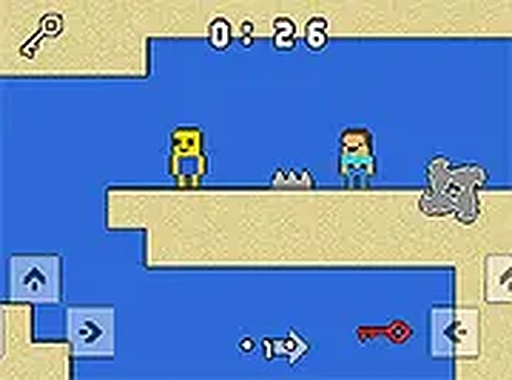
Partner Quest: Key Collection Challenge puts two players on the same screen, each controlling a separate character. The objective is straightforward: collect every red and yellow key scattered across the stage, then guide both characters to the exit door. The defining restriction is proximity. If the two characters drift too far apart, one vanishes from view, which forces the pair to move as a single unit rather than splitting up to cover ground faster.
Traps and Timing
Stages are filled with traps and barriers that demand careful timing. Some obstacles follow fixed movement patterns, while others react when a player gets close. Neither type is designed to be brutally punishing, but ignoring them leads to restarts. Because levels are short, a failed attempt costs little time, and the real difficulty comes from synchronizing two players' movements rather than solving abstract puzzles. [IMG_1]
The Countdown Clock
A visible timer runs during every stage, pushing teams to balance speed against caution. Rushing causes mistakes; hesitating wastes seconds. This pressure encourages efficient route planning and quick decisions. Some stages contain hidden shortcuts or alternate paths that can shave off precious time, and learning each layout helps teams improve their completion times over repeated attempts.
Progression and Communication
Early levels focus on basic movement and key collection, while later stages layer multiple obstacles and tighter spaces. Visual themes and trap arrangements change regularly, so stages do not feel like recycled patterns. Success depends heavily on talking through decisions: who grabs which key, when to cross a trap, and which path to take. Teams that communicate clearly finish faster and restart less often. The simple controls and short sessions make the game accessible to players of all ages, including those new to cooperative puzzles.









Comments
0 comments