
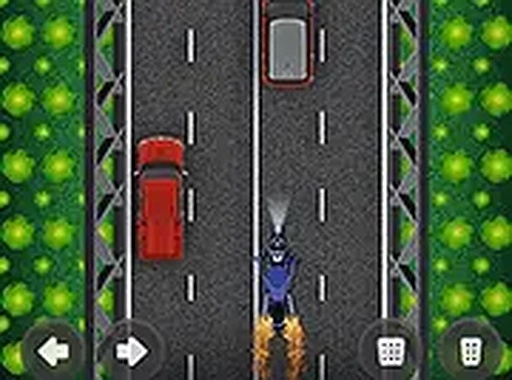
Automatic Acceleration, Manual Steering
Highway Dash Motorcycle strips away throttle and brake controls. The motorcycle speeds up on its own, so the only input you manage is lateral movement between lanes. On a keyboard, the left and right arrow keys shift the bike sideways. On a touchscreen, a tap or swipe in either direction produces the same result. That single-axis control scheme is what defines every run: you are not managing speed, you are managing position.
Reading Traffic Before It Reaches You
Early in a run, the road is sparse. Gaps between vehicles are wide, and you can drift between lanes with little urgency. Distance changes that. Traffic clusters tighten, and individual vehicles begin changing lanes without warning. Because the bike never slows down, your margin for error shrinks as the score climbs. The practical skill here is scanning several car lengths ahead and committing to a lane before the gap closes, rather than reacting at the last moment.
What a Run Looks Like
A single attempt can last seconds or stretch into minutes depending on how cleanly you navigate. There is no level select or checkpoint system described; the run simply continues until contact with another vehicle ends it. The game resets immediately after a crash, which keeps the loop tight. Distance and high score are displayed on a clean interface, and full-screen mode is available for a less cluttered view.
Visual Feedback on the Road
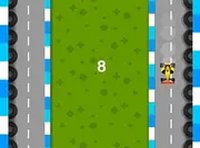
The highway uses lane markings, guardrails, and a shifting backdrop to convey forward motion. Vehicles come in different colors and shapes, which helps you distinguish individual traffic in dense sections. The camera stays centered on your motorcycle with traffic approaching from ahead, so your attention remains on the road rather than on peripheral elements.
Comments
0 comments