
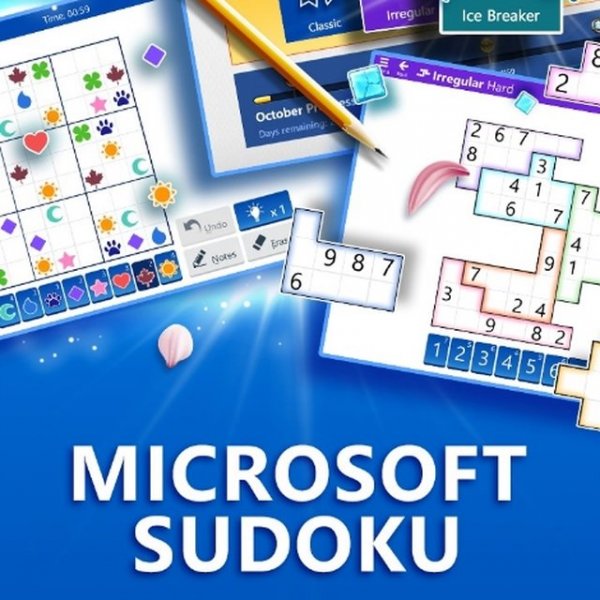
What You Are Solving
Every puzzle in Logic Grid Puzzle Challenge is a 9x9 grid divided into nine 3x3 blocks. The goal is to fill each empty cell with a digit from 1 to 9. The rule is simple but strict: no digit may appear twice in any row, any column, or any 3x3 block. That single constraint is what turns a blank grid into a pure logic problem. You never guess. You eliminate options until only one digit can fit a cell, then move to the next.
How a Turn Works
Start by picking a difficulty level. Easier modes pre-fill more numbers, so the grid gives you more starting points. Harder modes leave more cells empty, which means longer chains of deduction before the first digit is certain. To place a number, select a cell and then choose a digit from the panel. If you are unsure, the note-taking feature lets you jot down possible numbers for that cell. As you eliminate options elsewhere, you delete notes until a single candidate remains.
Difficulty and the Note-Taking Tool
Difficulty is not just about speed. More empty cells force you to rely on the note-taking feature instead of immediate pattern recognition. Notes turn each cell into a small list of candidates, and crossing off numbers becomes a visible record of your reasoning. Beginners can start on easier grids and ignore notes entirely. Experienced solvers use notes to break harder puzzles into smaller, checkable steps.
Where It Runs and Who It Suits
The game is built on HTML5, so it runs in a browser on PCs, phones, and tablets without separate downloads. Full-screen support hides browser clutter so you can concentrate on the grid. The interface is clean and intuitive, which matters when you are scanning rows and blocks for repeated digits. Because it is family-friendly and educational, it works for children learning number patterns and for adults who want a quiet mental workout.









Comments
0 comments