
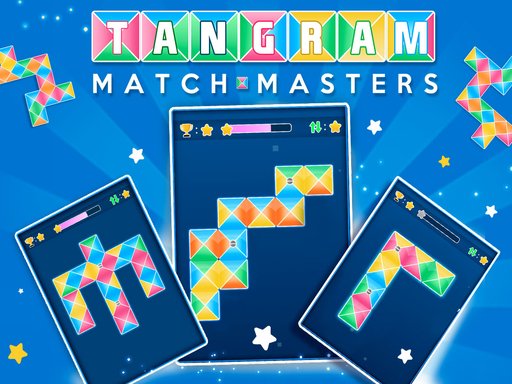
Where Shape Meets Color Logic
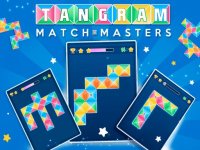
Color Match Tangram Puzzle takes the familiar task of filling a silhouette with blocks and adds a second condition: every piece you place must share its border color with the piece it touches. That single rule changes how you approach the board. You are not just looking for a shape that fits; you are tracking which colors can sit next to each other. The outline stays fixed, and your set of multicolored blocks stays fixed, so the solution depends on arranging pieces in an order and orientation that satisfies both geometry and color.
How a Turn Unfolds
Each puzzle begins with a blank shape and a collection of colored blocks. You drag a block into the outline. Visual hints show which colors are compatible with the spaces already filled, so you can see immediately whether a placement will work. As the board fills, the remaining gaps become more constrained. A block that seemed optional early on may become the only piece that can bridge two different border colors. The challenge is to use all blocks exactly once, which means every placement affects what is still possible later.
Planning Over Guessing
Early puzzles accept a trial-and-error approach. Later ones reward planning. Before placing anything, it helps to scan the outline for spots where multiple colors meet, since those junctions often dictate which block must go there. Orientation matters too: rotating a block can change which border color faces a neighbor. If you get stuck, rearranging placed blocks or changing their orientation can reveal a path forward. The game provides clear feedback, so a wrong match is easy to spot without penalty.
Designed for Quick or Long Sessions
The interface stays out of the way, leaving the puzzle itself as the focus. Bright visuals make color matches easy to read, and the difficulty rises gradually rather than jumping. That makes the game suitable for a short break or a longer sitting. Because the rules are simple to explain, children and adults can play side by side, and the family-friendly design supports shared solving across generations.





Comments
0 comments