
Driving Feel and Vehicle Control
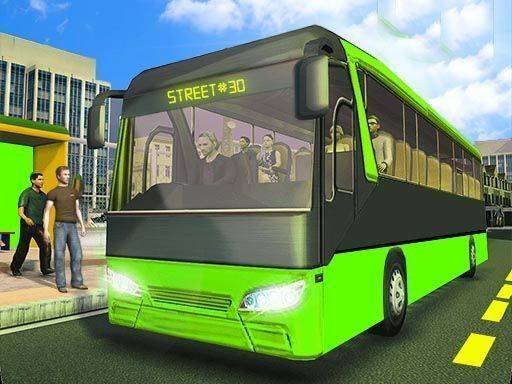
Urban Coach Transit Challenge is built around the moment-to-moment handling of a large vehicle. Acceleration, braking, and steering all require deliberate input. Jerky movements—hard stops, sharp turns, sudden acceleration—trigger penalties, so the game rewards a steady hand and looking ahead. Each bus in the game handles differently: longer models demand wider turns and earlier braking, while compact buses respond more quickly. This variation means you cannot rely on a single driving style across every route.
City Streets and Route Logic
The 3D city environment uses realistic intersections, crosswalks, and road markings. Routes are designed to test your ability to follow directional cues and anticipate stops. Some paths thread through narrow downtown streets; others run along wider avenues. Traffic density and unexpected obstacles change from trip to trip, so memorizing a route helps but does not guarantee a clean run. You need to read the road as it unfolds.
Passenger Stops and Time Pressure
A central task is stopping accurately at designated points to let passengers board and exit. Precise parking is rewarded; sloppy or missed stops hurt your overall performance. Every route has a time limit, which creates a constant tension between speed and caution. Rushing leads to mistakes, but driving too slowly risks running out of time. The result is a thoughtful exercise in prioritization rather than a simple race.
Progression and Vehicle Unlocks
Completing routes successfully unlocks additional buses with distinct handling characteristics. Some are longer and require wider turns; others are more agile. This encourages experimentation and adds replay value, because mastering one bus does not guarantee success with another. The progression system is straightforward—no complex upgrade trees—keeping the focus on driving skill and route knowledge.
Camera Views and Offline Play
Multiple camera angles are available, including an interior cabin view for immersion and an external perspective for spatial awareness. You can switch between them based on preference or the demands of a tight maneuver. The game runs without an internet connection, and each route fits into a short session, though you can also play through multiple levels in one sitting. This flexibility suits both quick breaks and longer play periods.







Comments
0 comments